
USA Projects
Established in 2013, TMC USA is a wholly owned subsidiary of The Metals Company (TMC) which has filed two applications under the Deep Seabed Hard Mineral Resources Act (DSHMRA) of 1980: a consolidated application for a commercial recovery permit and an exploration license in the USA-A area and an exploration license in the USA-B area. The two areas cover 187,017 km2, are estimated to host over 1.6 billion tonnes of high-grade polymetallic nodules and, if developed, could deliver $23.6 billion in NPV based on previously completed SEC Subpart S-K1300 PFS and IA-level assessments.

Regulatory and Executive Policy Context
Under DSHMRA, the U.S. National Oceanic and Atmospheric Administration (NOAA) regulates deep seabed mineral exploration and commercial recovery activities of U.S. citizens in the high seas. DSHMRA, alongside NOAA’s implementing regulations for exploration (1981) and commercial recovery (1989), and other applicable federal environmetal laws, including the National Environmental Policy Act (NEPA), Marine Mammal Protection Act (MMPA) and Endangered Species Act (ESA), collectively form the comprehensive U.S. deep seabed mining code.
In April 2025, President Donald J. Trump issued Executive Order 14285 “Unleashing America’s Offshore Critical Minerals and Resources” that elevated the development of deep seabed resources to a national priority. In addition to tasking several agencies to explore offtake and financing support for the domestic industry, it instructed NOAA to accelerate permitting under its existing authorities. In January 2026, NOAA updated its regulatory framework to establish a consolidated application and review process for exploration licenses and commercial recovery permits.
Under DSHMRA, NOAA is responsible for reviewing and issuing exploration licenses and commercial recovery permits with inter-agency collaboration, mandatory public consultation periods and environmental impact assessments conducted pursuant to NEPA, which requires federal agencies to assess the potential environmental impacts of proposed actions and consider alternatives and mitigation measures before making decisions.
DSHMRA imposes several noteworthy requirements on U.S. operators, including U.S. flagging of all mining vessels and at least one transport vessel, domestic processing of recovered minerals, with foreign processing considered on an exemption basis and subject to assurances to return processed minerals to the United States.
TMC USA-A
On January 22, 2026, TMC USA filed a consolidated application for a commercial recovery permit and an exploration license over the USA-A area. The application was filed under NOAA’s new consolidated application and review process and represents the first submission of its kind.
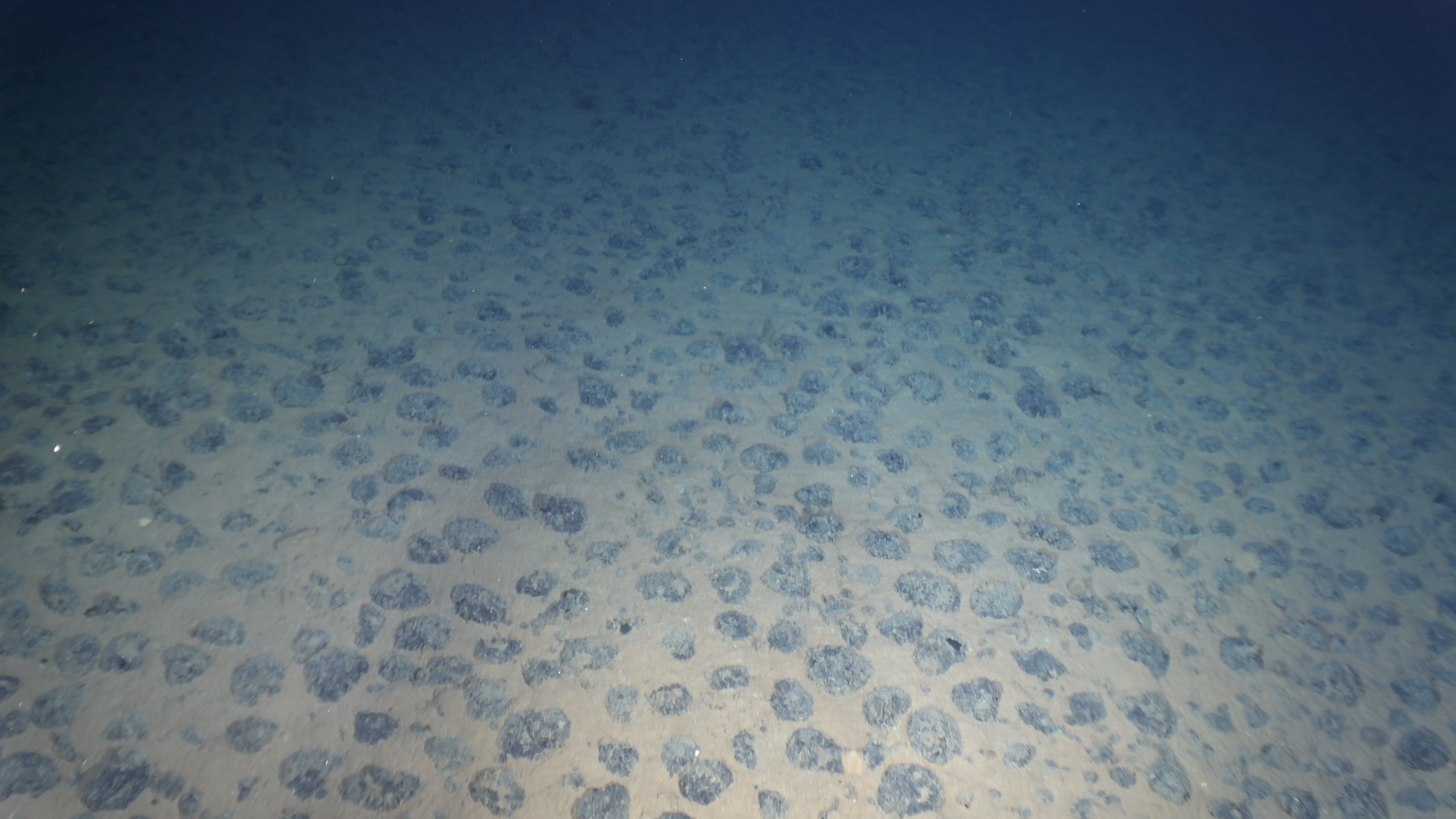
Located in the eastern Clarion Clipperton Zone (CCZ) of the Pacific Ocean, the USA-A area covers a total seafloor area of 65,160 km2 and contains estimated resources of 619 million tonnes of nodules.
Part of this area (25,160 km2) was covered in TMC’s Technical Report Summary for the Pre-Feasibility Study published in August 2025, which marked a world-first declaration of Mineral Reserves for a nodule project of 51 million tonnes.
TMC USA was uniquely positioned to submit a consolidated application as its parent and affiliates have completed the requisite resource, environmental, engineering and processing work to begin commercial recovery activities.
On May 1, 2026, NOAA determined that the consolidated application over the USA-A area was in full compliance with DSHMRA and its implementing regulations, and published the USA-A application in the Federal Register on August 19, 2026. NOAA will hold a virtual hearing to take comments on the USA-A application on October 13, 2026.

TMC USA-B
On April 29, 2025, TMC USA filed an application for an exploration license over the TMC USA-B area. Located in the central and western CCZ, the USA-B Exploration Area covers total seafloor area of 121,830 km2 in the CCZ and contains estimated resources of 1.02 billion tonnes of nodules.
The economic potential of the nodule resource hosted across the USA B areas is detailed in TMC’s Technical Report Summary for the Pre-Feasibility Study and Technical Report Summary for the Initial Assessment published in August 2025, which outlined an estimated Net Project Value of $18.1 billion.
On May 28, 2026, NOAA formally certified the USA-B exploration license application, and published a Notice of Intent to prepare an Environmental Impact Statement for the application in the Federal Register on August 17, 2026.
Environmental Impact Statement Development
Upon certification and pursuant to TMC USA’s applications, NOAA will develop and publish an Environmental Impact Statement for both the USA-A consolidated application, as well as the USA-B exploration license application. The draft EIS will be made available for public comment and NOAA will host a public meeting. These documents will be prepared in compliance with the National Environmental Policy Act, other key environmental legislation, and NOAA’s implementing regulations. We will post updates on the status of each application above as they become available.
For more information, visit our Investors section.
Public Consultation
At various stages during the permitting process, TMC USA’s applications and documents produced pursuant to these applications will be published by NOAA for public consultation. NOAA’s public consultation activities to date are listed below.
Federal Register Notice of Public Comment Period for USA-A and USA-B applications:
NOAA Virtual Public Hearing for USA-A application
NOAA Virtual Public Hearings for USA-B application
Pre-Feasibility Study and Initial Assessment
In August 2025, TMC released two technical economic assessments prepared in accordance with SEC Regulation S-K Subpart 1300:
- a world-first Pre-Feasibility Study (PFS) for a polymetallic nodule project (NORI-D), which is covered by the Commercial Recovery application USA-A. Read the Technical Report Summary (TRS) for the PFS here.
- an Initial Assessment (IA) outlining scalability beyond NORI-D across other NORI and TOML areas, covered by two exploration applications submitted by TMC USA to NOAA. Read the TRS for the IA here.